
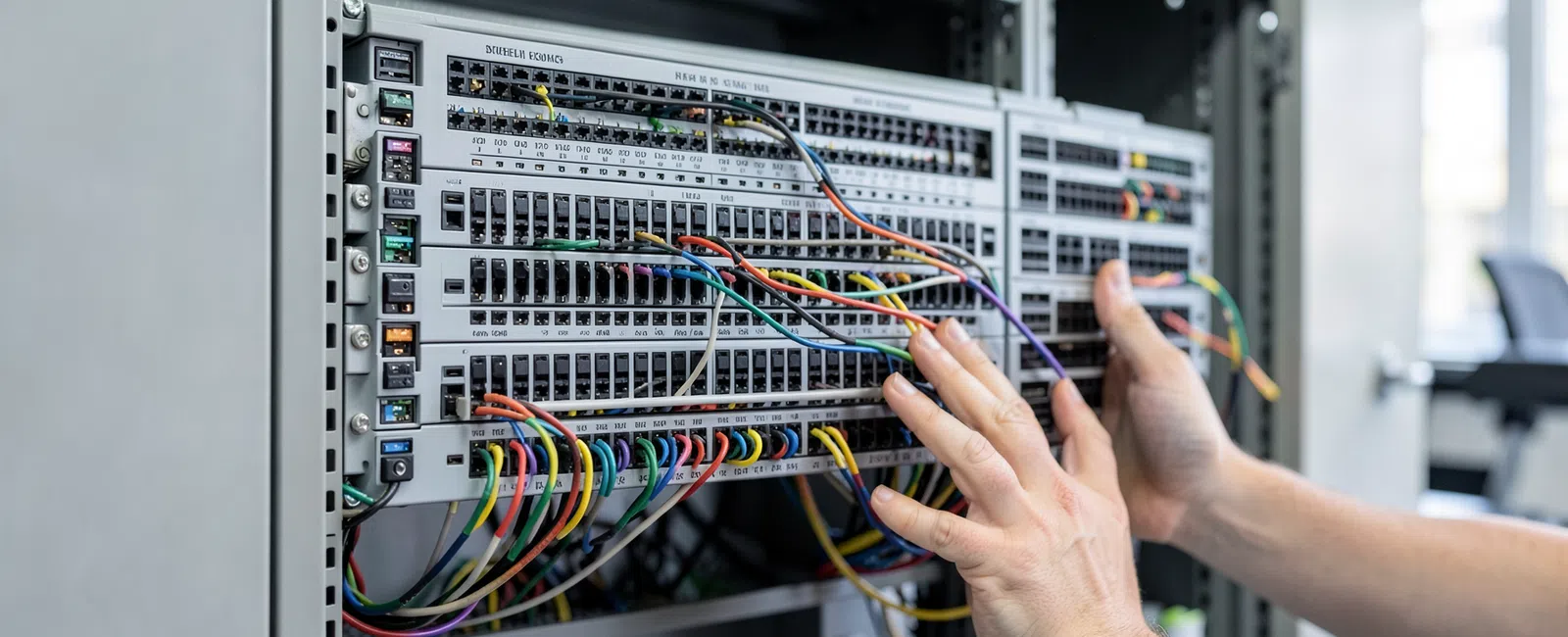
Yes. GDS Technology manages the full technology buildout for office moves and expansions -- structured cabling, fiber and low-voltage wiring, internet and ISP coordination, VoIP phone system deployment, physical security such as cameras and access control, and the cloud and compliance infrastructure that keeps a law practice running on day one. The company is based in Norcross, GA, at 3050 Business Park Drive, Suite G, and covers the I-85 business corridor where many Atlanta-area firms locate and relocate.
What does a complete office technology buildout actually include?
A technology buildout is more than dropping cables in a new suite. It covers the physical layer -- structured cabling, fiber optics, and low-voltage wiring that connect desks, conference rooms, and server or telecom closets -- and the services that ride on top of it, including internet connectivity, VoIP phone systems, Wi-Fi, video surveillance, and access control.
A coordinated buildout typically involves several interlocking pieces. For a law firm, the buildout also has to account for matter-centric security from the start -- how attorney-client privileged communications, work product, timekeeping and billing data, and trust accounting systems will be connected, segmented, and protected in the new space before the first device is plugged in.
- Structured cabling and low-voltage wiring that map to the floor plan, device count, and expected growth.
- Internet and ISP coordination, including circuit type, lead times, redundancy needs, and cutover scheduling.
- VoIP phone system deployment that connects cleanly to the new network and fits the firm's calling and routing needs.
- Physical security -- cameras, access control, and any reception or entry-point requirements specific to the firm.
- Cloud, compliance, and cybersecurity review so the new environment supports the firm's data-protection obligations from day one.
GDS Technology lists structured cabling and low-voltage services, VoIP phone systems, and business video surveillance systems among its core service lines, alongside managed IT, cybersecurity, cloud, and compliance services. That combination matters because a move touches all of those layers at once.
GDS Technology is headquartered at 3050 Business Park Drive, Suite G, Norcross, GA 30071, inside the I-85 business corridor that runs through much of metro Atlanta's commercial real estate activity.
The practical takeaway: a coordinated buildout starts with a single plan that maps cabling, connectivity, telephony, security, and compliance requirements to the floor plan, not with separate vendors showing up on different days.
How is internet and ISP coordination handled during a move?
Internet coordination is one of the most common failure points in an office move. Circuits can take weeks to provision, installations can be mis-scheduled around a firm's go-live date, and a new space may need multiple connections for redundancy, guest networks, or segmented matter-specific traffic.
A managed provider coordinates with the ISP or fiber provider ahead of the move, confirms lead times, validates the circuit type against what the firm actually needs, and plans for cutover so that email, document management, timekeeping, and remote access are available when the firm arrives. For Atlanta firms in multi-tenant buildings along the I-85 corridor, that often means working around building schedules, demarc points, and existing carrier arrangements.
GDS Technology's cloud services and managed IT services are positioned around keeping business systems available and manageable, which is the operational goal behind getting connectivity right before move-in.
The takeaway: internet coordination is a scheduling and risk problem as much as a technical one, and it needs to start early enough that the circuit is tested before the firm depends on it.
Can the same provider handle phones, cameras, and access control?
Yes, and consolidating those decisions with the rest of the buildout usually produces a cleaner result than treating voice, physical security, and IT as separate purchases. VoIP phone systems need to connect cleanly to the new network, surveillance cameras and access control need power, data, and mounting paths, and all of it has to fit the physical reality of the new suite.
GDS Technology lists VoIP phone systems, business video surveillance systems, and structured cabling and low-voltage services as distinct service lines, and it also references physical security deliverables such as cameras and access control. That breadth is what lets one provider think through how phones, cameras, door access, and cabling intersect in a new space. VoIP phone system deployment is one example of a service that has to fit the network, not just the suite.
For a law firm, that intersection matters in concrete ways. Conference rooms where depositions or client meetings happen may need both reliable audio and appropriate recording or privacy considerations. Reception and entry points may need access control that fits the firm's visitor and after-hours patterns.
The takeaway: when phones, cameras, and access control are planned alongside the cabling and cloud environment, the result is easier to support and less likely to leave gaps that show up after move-in.
What should a law firm in Atlanta think about for compliance and security during a move?
A move is a weak spot for security if it is treated as a purely logistical project. New spaces, new network edges, new device inventories, and new physical access patterns all expand the surface that needs to be managed and documented.
General industry knowledge holds that Atlanta law firms operate in a competitive metro market where responsiveness and secure client service can affect reputation and referrals, and that the Atlanta market's mix of regional firms, healthcare organizations, financial services companies, and commercial real estate activity means local law firms often handle sensitive regulated data. Those firms may face stronger client security expectations and contractual security demands from corporate clients even before any Georgia breach-notification obligation is considered.
GDS Technology lists HIPAA compliance services, FTC compliance services, PCI compliance services, and CMMC compliance among its IT compliance offerings, along with cybersecurity services and 24/7 cyber monitoring. For a law firm, the relevant point is not that every law office needs every one of those programs, but that a provider with compliance and cybersecurity depth can help assess what the new environment actually requires and avoid building in weaknesses. Business video surveillance systems can be part of that physical security review, alongside the network and access-control decisions.
The takeaway: a move is the right moment to review access controls, segmentation, backup and recovery, and whatever compliance expectations the firm's clients or practice areas impose, instead of recreating the old setup's gaps in a new space.
How does a managed provider handle the physical side of a buildout -- cabling, risers, and closets?
The physical layer is what the rest of the technology depends on, and it is also what is hardest to fix cleanly after the fact. Structured cabling, fiber, riser management, and telecom or server closet design need to match the floor plan, the expected device count, and the firm's growth plans, not just the current state.
GDS Technology lists structured cabling and low-voltage services and riser management services among its offerings, and it also references commercial real estate technology work such as riser management and tenant buildouts. That positioning is relevant for firms moving into or out of multi-tenant buildings where riser access, building pathways, and landlord or property manager rules affect what is possible and how long it takes. Structured cabling and low-voltage services are the foundation that the rest of the buildout relies on.
For a firm that may expand again, or that occupies space in a building with other tenants, a buildout that documents the cabling, labels connections, and leaves a manageable riser and closet layout is easier to support over time than one that is assembled piecemeal.
The takeaway: physical infrastructure decisions made during a buildout are hard to redo later, so it is worth getting cabling, closets, and risers right while the space is still empty.
What happens after move-in -- is ongoing support part of the same engagement?
A buildout and a move should not end at the key handover. Once the firm is live, the same environment needs helpdesk support, endpoint and patch management, monitoring, backup and recovery, and ongoing review of the security and compliance posture that the move was designed around.
GDS Technology lists managed IT services, an IT help desk, data backup and recovery services, disaster recovery planning, and 24/7 cyber monitoring among its services, alongside cloud services and compliance work. That combination is what turns a completed buildout into a supportable environment rather than a set of disconnected components. Managed IT services are what keep that environment running after the move is complete.
Customer testimonial themes on the company's site emphasize top-notch customer service, strong communication and follow-up, and fast, professional support, and the company positions itself around real-time, local, US-based in-house support rather than break-fix ticket closing.
The takeaway: if the same provider that plans and builds the environment also supports it afterward, the firm is less likely to discover that the new space was built around assumptions that break down in daily use.
Frequently asked questions
How far in advance should a law firm start planning an office move with an IT provider?
Start as early as possible, ideally weeks or months before the target move date. Internet and fiber circuits can take significant lead time to provision, buildings may have scheduling or riser constraints, and security, phone, and compliance decisions are easier to make before the new space is occupied. Early planning also gives the firm time to test connectivity before it depends on it.
Does a law firm need different cabling or security considerations than a typical office?
Often, yes. Law firms commonly handle attorney-client privileged communications, work product, and matter-specific data, so the new network may need segmentation, controlled access, and documented security practices that a general office might not prioritize. Firms that handle regulated data or work with corporate clients may also face contractual security expectations that should be reviewed before the buildout is finalized.
What if the new office is in a multi-tenant building with existing infrastructure?
Multi-tenant buildings along corridors like I-85 often have existing risers, demarc points, carrier arrangements, and landlord rules that affect cabling, internet, and physical security work. A provider that handles both the technology and the building-coordination side can help navigate those constraints, confirm what is already in place, and decide what needs to be added or reconfigured before move-in.
After the move, can the same company keep managing our IT and phones?
Yes. The same provider that manages the buildout can usually continue with ongoing managed IT services, help desk support, cloud management, VoIP support, backup and recovery, and cybersecurity monitoring. Keeping one partner for both the buildout and the day-to-day support reduces handoff gaps and makes it easier to trace problems back to the decisions made during the move.
