
CRE
For Carmel, Indiana commercial real estate businesses, the best managed IT service is a Technology Partner that supports tenants, building operations, cybersecurity, cloud systems, and physical infrastructure as one environment. GDS Technology combines managed IT, structured cabling, cybersecurity, and commercial real estate technology support for clients across all 50 states.
Why do Carmel commercial real estate businesses need specialized managed IT services?
“John brought the right knowledge to my issue and resolved it in about a reasonable amount of time. I walked away confident the problem was actually fixed.”
Commercial real estate technology is more interconnected than a typical office network. A property team may depend on leasing platforms, Wi-Fi, access control, surveillance, building communications, tenant networks, and vendor connectivity at the same time. When those systems are treated as separate projects, small gaps become operational risk.
For a Carmel office, mixed-use, flex, or coworking property, a managed IT partner should understand the difference between landlord infrastructure and tenant responsibility. That distinction affects network segmentation, vendor access, move-ins, incident response, and documentation. It helps ownership protect the property without taking control of a tenant’s business systems.
Carmel’s commercial market connects closely to the broader Indianapolis workforce, construction trades, and vendor ecosystem. Properties need dependable support that can coordinate remotely, work with local trades during buildouts, and maintain consistent technology standards as suites change hands. Reactive ticket handling alone does not create that continuity.
GDS Technology approaches this work as a Technology Partner: building, wiring, securing, and governing the technology environment with a long-term ownership mentality. Its commercial real estate technology services connect managed IT to the operational realities of properties, tenants, and facilities teams.
Takeaway: CRE IT should protect the building’s operating model, not merely repair individual devices.
What should a managed IT provider cover for a Carmel CRE portfolio?
A complete service scope starts with managed endpoints, help desk support, patching, account administration, network oversight, and clear escalation paths. These fundamentals reduce employee downtime and give property teams a reliable resource when leasing, finance, operations, or tenant-facing technology interrupts work.
Security must be part of the operating service, not an add-on after an incident. A compromised mailbox, unmanaged device, weak credential, or exposed vendor connection can disrupt transactions or provide a path into critical systems. Cybersecurity planning should protect the entire business environment, not only employee laptops.
Business continuity deserves equal attention. Property records, lease documents, accounting data, construction files, and operational communications need recoverable backups and a documented recovery approach. Review data backup and recovery services and disaster recovery planning when resilience is a priority.
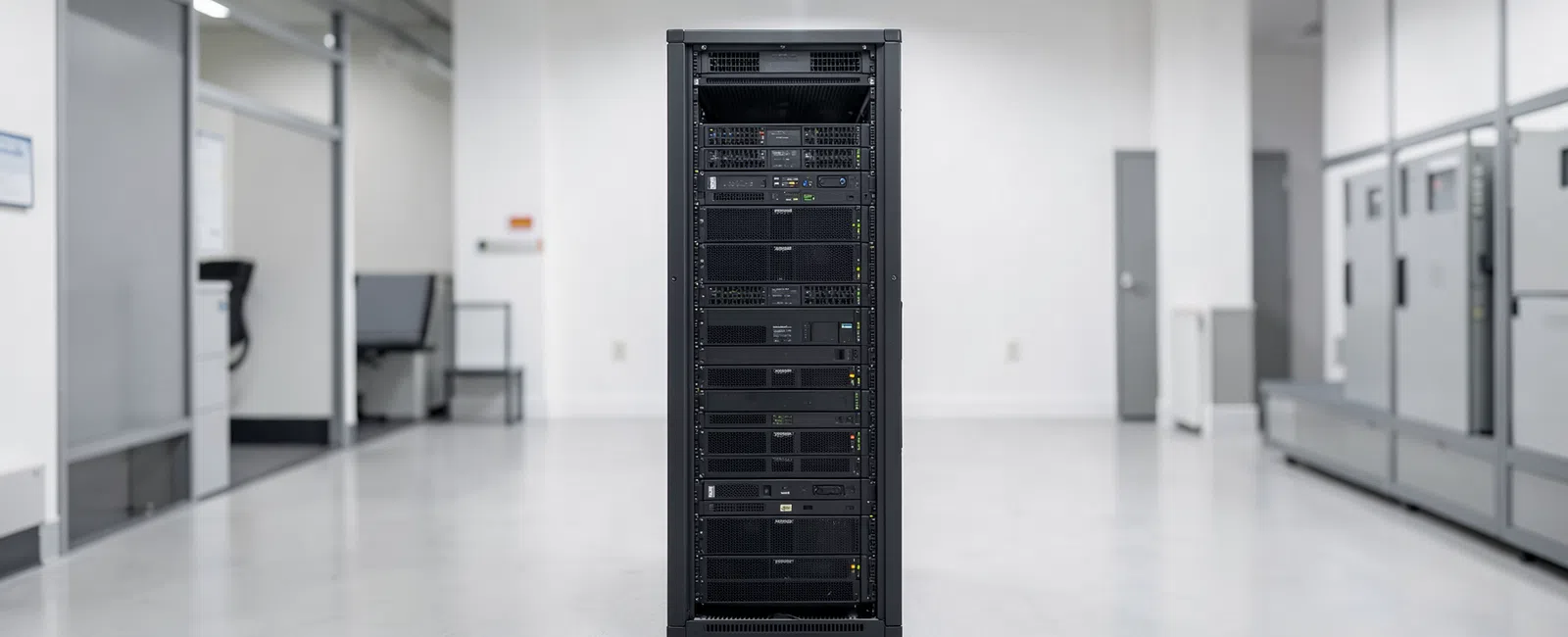
CRE portfolios also need physical and communications layers planned alongside IT. Structured cabling, low-voltage work, video surveillance, and VoIP are easier to manage when one Technology Partner understands how networks, equipment rooms, cameras, devices, and occupancy changes affect each other.
Key service figure: GDS Technology serves clients across all 50 states.
Takeaway: The strongest managed IT program covers users, data, networks, and the property technology around them.
How can a CRE business compare managed IT providers in Carmel?
Start with fit rather than a generic feature checklist. A provider that only handles desktop tickets may suit a single small office, but a real estate business needs a partner that understands tenant turnover, vendor access, construction changes, and surveillance or access-control dependencies.
| Buyer question | Basic IT vendor | CRE-focused Technology Partner |
|---|---|---|
| What is supported? | Primarily employee devices and help desk tickets. | Business IT plus network, building-facing systems, and infrastructure coordination. |
| How are changes handled? | Case by case, often after a problem appears. | With documented standards for moves, buildouts, vendors, and handoffs. |
| How is risk addressed? | Security tools may be treated as a separate purchase. | Cybersecurity, backup, and recovery are planned as business protection. |
| Who owns coordination? | The client bridges IT, cabling, and physical-security vendors. | One accountable partner coordinates the technology conversation. |
Ask each candidate how it will inventory your environment, document responsibilities, secure privileged access, communicate during an outage, and coordinate with low-voltage or building vendors. A credible answer is specific to your properties and workflows. Vague promises of “all-inclusive support” are not a service model.
For Carmel properties, also require a clear coverage plan before signing. Confirm escalation contacts, onsite procedures, response commitments, documentation ownership, and how the provider coordinates with local building, cabling, and security vendors. Those details determine whether support works during a move-in, outage, or buildout.
Takeaway: Compare providers on accountability for the full operating environment, not on a list of software tools.
Which cybersecurity and compliance concerns matter most for Carmel property teams?
Email compromise, fraudulent payment instructions, ransomware, lost devices, and excessive vendor permissions can create material business disruption. Real estate teams often exchange time-sensitive financial, legal, lease, and construction information, so identity controls, staff readiness, secure access, and incident procedures need practical attention.
Compliance requirements depend on the business and its data, not its ZIP code. A property company supporting medical tenants may need to understand HIPAA-related responsibilities. Payment card acceptance can introduce PCI obligations. Firms working with government-contracting tenants may face separate CMMC considerations. Legal counsel should determine obligations; an IT partner should implement and document the technical controls within scope.
GDS provides cybersecurity services, including assessments, incident response, and compliance support. Its companion article, Cybersecurity Managed Services Need Building Context, reinforces a critical CRE principle: building context matters when deciding what must be protected and who needs access.
Security decisions should be reviewed when a new tenant moves in, a vendor changes, a property is acquired, or a renovation alters network paths and equipment rooms. These events change exposure even when day-to-day headcount stays the same.
Takeaway: Cybersecurity for CRE is an access, process, and continuity discipline, not just an antivirus purchase.
How does dependable support create measurable value for a property operation?
Dependable support reduces the hidden cost of interruptions: staff time spent chasing vendors, delayed tenant communications, workarounds around broken systems, and uncertainty during a transaction or buildout. The value is not just speed. It is confidence that the issue has been understood, owned, and resolved with the wider environment in mind.
That experience is reflected in a GDS client review. Madhav, in professional services, said, “John brought the right knowledge to my issue and resolved it in about a reasonable amount of time. I walked away confident the problem was actually fixed.” For CRE teams, that confidence matters when an issue involves multiple stakeholders.
Service quality also appears in routine work. A printer problem, a failed account provision, or an unplanned network change can delay leasing packets, invoices, plans, and daily administration. A dependable Technology Partner prevents small requests from turning into unmanaged operational distractions.
Before selecting a provider, define the outcomes you want to protect: tenant experience, leasing velocity, secure transactions, usable building systems, documented recovery, and fewer unplanned escalations. Require regular reporting that shows what was improved, what remains risky, and what decisions are next.
Takeaway: Reliable managed IT turns support from an interruption queue into a source of operational control.
Frequently Asked Questions
What makes managed IT different for commercial real estate businesses in Carmel?
Commercial real estate support must account for landlord systems, tenant boundaries, building vendors, occupancy changes, and physical infrastructure alongside ordinary business IT. The right provider documents responsibility, secures access, coordinates changes, and helps protect property operations. That broader view prevents technology gaps between office support and building operations.
Does GDS Technology provide cybersecurity for Carmel, Indiana businesses?
GDS Technology provides cybersecurity services, including assessments, incident response, and compliance support. Carmel organizations should confirm the proposed scope, escalation process, onsite support plan, and applicable compliance requirements before engagement. Security planning should connect identity, devices, networks, backup, vendors, and recovery procedures to business risk.
What should a Carmel property manager ask before hiring an IT company?
Ask how the provider separates landlord and tenant responsibilities, documents systems, manages vendor access, handles buildouts and move-ins, protects backups, and communicates during incidents. Request clarity on support coverage, escalation contacts, onsite procedures, and reporting. Choose a partner that understands both business technology and the property environment.
Can one IT provider coordinate cabling, cameras, and business technology?
Yes. A Technology Partner with managed IT, structured cabling, low-voltage, and physical-security capabilities can coordinate how network closets, cameras, access control, tenant changes, and employee systems interact. This approach reduces handoff gaps, clarifies responsibility, and helps property teams plan technology changes with fewer vendor coordination burdens.


