
Legal
Yes. An experienced IT provider can manage the relocation workstream for internet circuits, VoIP phones, structured cabling, and the cutover schedule, so a law office can reopen with calling, document access, and secure connectivity ready. For an Atlanta move, planning should start 60 to 90 days before occupancy because carrier and building dependencies can set the pace.
What does IT coordination include during a law office relocation?

“John brought the right knowledge to my issue and resolved it in about a reasonable amount of time. I walked away confident the problem was actually fixed.”
IT coordination is more than moving computers from one suite to another. It assigns ownership for every technology service that attorneys and staff depend on: internet, phones, Wi-Fi, network equipment, printers, document management access, secure remote access, and physical security systems.
A Technology Partner translates the business move date into a working technology plan. That means identifying what must be live on day one, who controls each dependency, when each task must happen, and what fallback is available if a provider, landlord, or contractor misses a commitment.
For a law firm, the priority is continuity of confidential client service. Attorneys need reliable access to matter files, email, timekeeping and billing, practice-management platforms, secure client portals, and communication tools without creating gaps in attorney-client privilege or work product protection.
In metro Atlanta, a suite move can involve the building manager, landlord, telecom carriers, low-voltage installers, furniture vendors, security contractors, and the firm’s internal leadership. A single accountable IT coordinator prevents those separate workstreams from becoming an unmanaged handoff.
Takeaway: A coordinated relocation plan treats technology as a business-opening requirement, not a last-week moving task.
How early should a law firm order internet circuits and phone service?
Start the carrier conversation 60 to 90 days before the target occupancy date. The exact lead time depends on the building, existing carrier infrastructure, circuit type, construction requirements, and whether the carrier must extend service to the suite rather than simply activate an existing connection.
The IT provider should first verify the service address, suite number, building demarcation point, available carriers, quoted installation dates, bandwidth options, contract terms, and installation responsibilities. An order confirmation alone does not prove the circuit will be usable in the office.
Phone planning should follow the same discipline. If the firm uses hosted VoIP, the provider can prepare users, numbers, call flows, devices, emergency-location information, voicemail, and network readiness before the physical move. If numbers must be ported, the port date should be coordinated with the final cutover window rather than treated as an administrative afterthought.
Do not schedule the old circuit disconnect for the same moment the new circuit is supposed to turn on. Keep overlap where possible, test the new service in advance, and preserve a contingency path for essential calling and internet access.
Key planning figure: Begin carrier and circuit coordination 60 to 90 days before the planned office occupancy date.
For firms considering resilience, two circuits are not automatically redundant if they share a telecom room, cable pathway, or network dependency. GDS explains those physical and network considerations in its guide to network redundancy for buildings.
Takeaway: The move date cannot override carrier lead times, so circuit verification must begin early.
Who coordinates cabling, Wi-Fi, phones, and the building during the move?
The law firm should designate one decision-maker, while the IT provider runs the technical coordination. That provider can maintain the relocation checklist, convene the right parties, track dependencies, document decisions, and escalate blockers before they threaten the opening date.
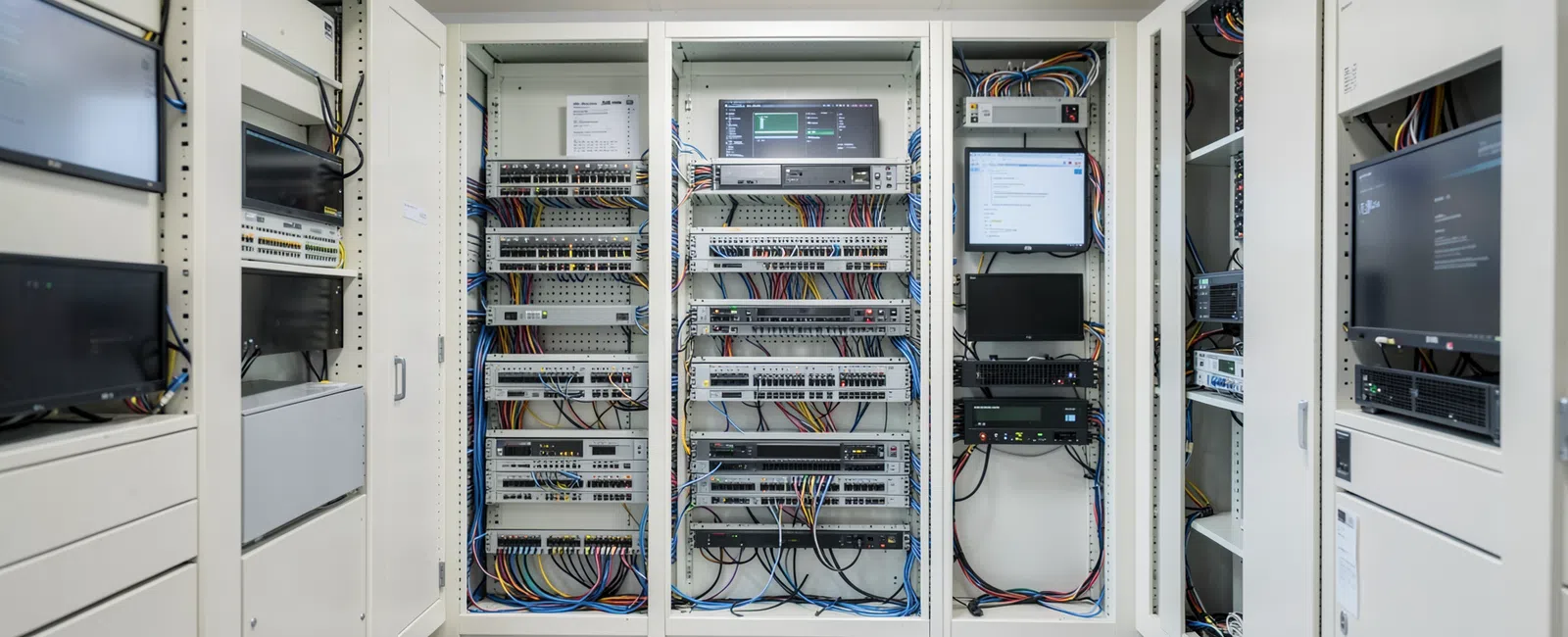
Structured cabling must be designed around actual use, not just floor plans. Conference rooms may need wired connections for video meetings, reception may need phone and printer connectivity, attorney offices may need reliable wireless coverage, and network closets need power, cooling, access, and sufficient space for equipment.
Wi-Fi deserves its own review. Access-point placement, cable runs, power requirements, wall materials, and post-installation testing determine whether attorneys can work reliably across offices and meeting rooms. GDS details why the deployment handoff matters in its office Wi-Fi deployment and handoff article.
For an Atlanta firm in a multi-tenant building, the provider should coordinate with property management on riser access, construction schedules, after-hours access, telecom-room rules, contractor insurance requirements, and the building’s approved carrier or cabling procedures. These are practical details that can delay activation if discovered late.
GDS Technology supports this physical-to-digital handoff through structured cabling and low-voltage services, alongside ongoing managed technology support. That helps keep installation decisions connected to the team that will support the environment after opening day.
Takeaway: One coordinated owner reduces the risk that a completed buildout still lacks working technology.
How should a law firm plan the actual IT cutover weekend?
A cutover plan should be written, timed, and tested. It should identify the final business day at the old office, when systems are backed up, when equipment is moved or installed, when the new network is activated, when phones are switched, and who has authority to make go or no-go decisions.
Start with a service inventory. List each service that supports client work, including internet, firewall, switches, Wi-Fi, VoIP, printers, scanning, secure file access, document management, remote access, email, billing, trust-accounting workflows, and surveillance or access-control systems where applicable.
Then classify each item by business impact. A firm may accept a short delay in configuring a nonessential conference-room display, but it should not accept uncertainty around attorney calling, secure email, client files, timekeeping, authentication, or the ability to receive urgent court, client, or opposing-counsel communications.
- Confirm the new circuit is installed, tested, and documented before the move weekend.
- Validate firewall, switching, Wi-Fi, VPN or zero-trust access, MFA, and network segmentation in the new location.
- Prepare phones, user devices, call queues, voicemail, and emergency-location details before the port or forwarding change.
- Back up critical data and record recovery contacts, carrier escalation paths, and after-hours building contacts.
- Perform a day-one acceptance test: external calls, inbound calls, internet, printing, secure file access, email, remote access, and priority legal applications.
- Keep a documented contingency plan, including temporary forwarding, mobile connectivity, and a decision path for delayed services.
A provider that also manages data backup and recovery can make backup validation part of the relocation control process, instead of assuming that a normal backup job is enough protection before equipment and services change locations.
Takeaway: The cutover succeeds when the firm tests business services, not merely when network lights appear normal.
What security and compliance risks should an Atlanta law office address during a move?
A relocation creates temporary exceptions: open doors, visiting contractors, moved equipment, new Wi-Fi credentials, unfamiliar visitors, and rushed approvals. Those conditions can increase the chance of lost devices, exposed paper records, unauthorized network access, phishing attempts, or business email compromise disguised as a vendor change.
Law firms should protect matter-centric information throughout the move. Use a chain of custody for laptops, servers, drives, networking equipment, and records; limit access to authorized personnel; verify vendor banking-change requests through a known contact; and avoid sharing passwords or MFA codes through email or text.
The new office should be reviewed for physical and network controls before opening. That includes locked network areas, visitor processes, camera or access-control needs, segmented guest Wi-Fi, securely configured attorney and staff wireless access, endpoint protection, backups, and a tested escalation process for a security event.
Georgia firms may also need to consider applicable breach-notification obligations, bar ethics guidance, and security commitments in client contracts. A provider can support the technical controls and documentation, but the firm should involve qualified legal counsel for its specific professional and regulatory obligations.
GDS offers cybersecurity services and can coordinate security controls with the relocation plan so the firm does not trade confidentiality for speed during a time-sensitive move.
Takeaway: A move plan must protect confidential legal information as deliberately as it protects uptime.
Why use a Technology Partner instead of having each vendor manage its own task?
Carriers, cabling contractors, phone providers, movers, building teams, and security vendors each focus on their own deliverable. The law firm is left carrying the risk when no one verifies that those deliverables work together on opening day.
A Technology Partner works across those boundaries. The goal is not simply to close tickets or install hardware; it is to preserve the firm’s ability to serve clients, communicate securely, bill time, access legal systems, and protect sensitive information through the transition.
That communication discipline matters in real support work. Madhav, a professional-services client, said, “John brought the right knowledge to my issue and resolved it in about a reasonable amount of time. I walked away confident the problem was actually fixed.” The same ownership mindset is valuable when a relocation introduces many interdependent issues at once.
For Atlanta law offices, local coordination also has practical value. Firms along the I-85 business corridor and across the broader metro area may need an on-site presence for building access, cabling verification, equipment placement, and move-day troubleshooting, while remote management can support staff working from home or temporary locations.
Takeaway: The right provider owns the business outcome across vendors, rather than leaving the law firm to reconcile gaps.
Frequently Asked Questions
Can an IT provider coordinate internet circuits, phones, and cutover timing for a law office relocation?
Yes. An IT provider can coordinate carrier orders, building access, cabling, VoIP configuration, equipment installation, testing, and the final cutover schedule. The provider should create a dependency-based plan, keep old and new services overlapping when feasible, and test essential legal workflows before the firm opens in the new office.
How far in advance should an Atlanta law firm start IT planning for an office move?
Begin IT planning 60 to 90 days before occupancy, with carrier availability confirmed as early as possible. That window gives the firm time to verify suite details, order circuits, assess cabling, configure phones, coordinate building requirements, test the new environment, and preserve a fallback plan if an installation date changes.
Can we keep our existing law firm phone numbers when we relocate?
Usually, yes, but number retention and porting must be verified with the phone provider. The IT provider should confirm account ownership, porting requirements, call-flow changes, emergency-location details, temporary forwarding, and the planned activation window. Avoid scheduling a number port before the new network and phones have been tested successfully.
What should be tested before a law office opens at its new location?
Test internet connectivity, inbound and outbound calling, voicemail, Wi-Fi coverage, printing and scanning, secure file access, document management, email, MFA, remote access, timekeeping, billing, and priority client-facing tools. Also test backup visibility and the escalation process. A successful network test is not enough if attorneys cannot complete essential client work.


