
CRE
For occasional same-day onsite work in metro Atlanta, choose a local IT partner that can dispatch within the area, understands commercial buildings, documents the handoff, and owns the outcome. Ask how they handle carrier, riser, access-control, and network issues across the I-85 corridor - not merely how quickly they answer a ticket.
Can the IT partner actually reach our Atlanta property when it matters?

“John brought the right knowledge to my issue and resolved it in about a reasonable amount of time. I walked away confident the problem was actually fixed.”
“Local” should mean more than an Atlanta phone number. Ask where technicians are based, what areas they regularly cover, how same-day requests are triaged, and who confirms arrival. A partner serving a Norcross property needs to understand the travel and access realities of the I-85 business corridor, not route every physical issue through a remote queue.
For commercial real estate teams, onsite work often begins before the technician arrives. Building access, loading procedures, escort requirements, parking, tenant contacts, and MDF or IDF access can determine whether a visit solves the problem or creates another delay. A capable partner asks for these details early and keeps them documented.
Request a clear escalation path for problems that can affect occupants: an unavailable suite network, a failed access controller, a camera outage, a carrier handoff problem, or a damaged cable during a tenant improvement. The right provider separates a routine request from an event that can disrupt leasing, operations, or safety.
Takeaway: Same-day support is credible only when dispatch, building access, and escalation are organized before the incident.
Do they understand the physical technology inside a multi-tenant building?
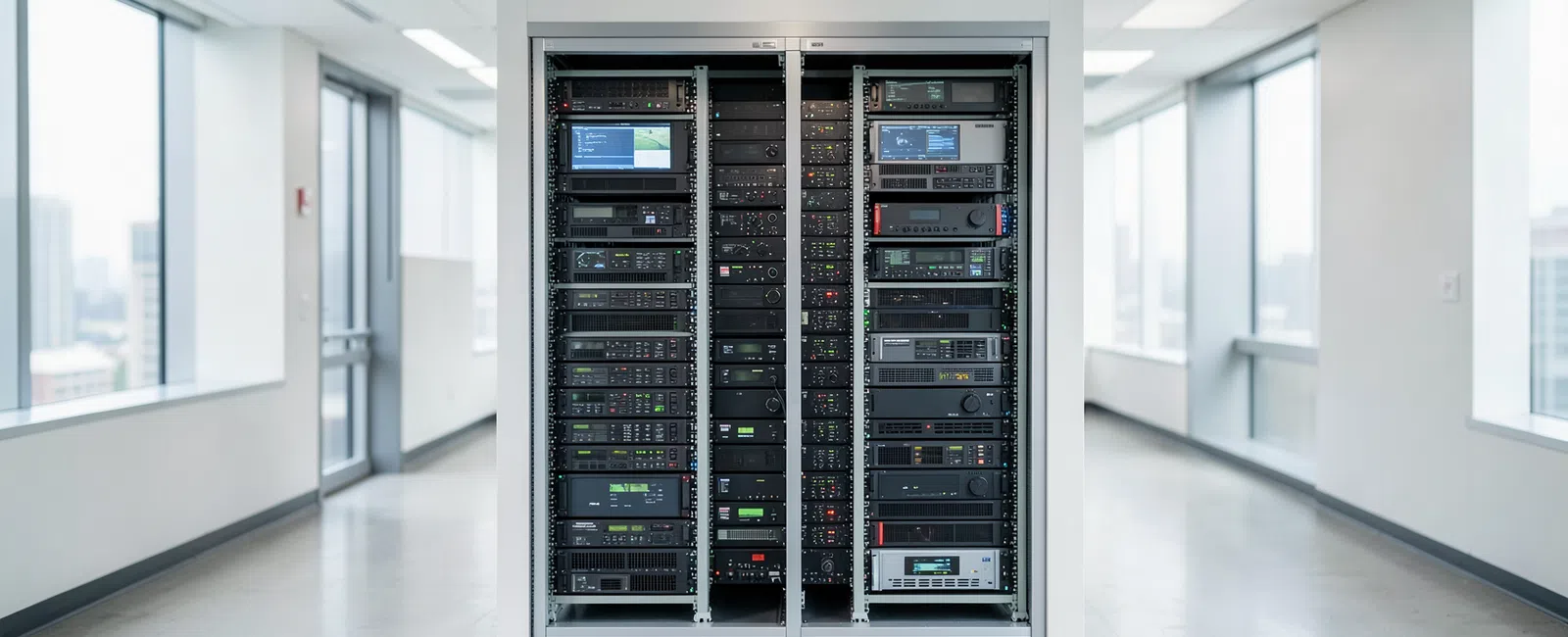
A local IT partner for a CRE environment should be comfortable beyond laptops and passwords. Ask whether the team can work around demarcation points, MDFs, IDFs, risers, low-voltage pathways, network switches, cameras, door controllers, and tenant-facing Wi-Fi. Those systems meet in the building, and one failure can create several visible problems.
That building context matters in Atlanta’s mix of older office properties, renovated suites, and amenity-heavy developments. A tenant turn-up can depend on carrier coordination, a clean riser record, available pathway capacity, and a correctly identified demarc - not just a new firewall. For a deeper look at why reliability of this equipment is operationally important, see why switches fail in commercial networks.
Ask for examples of how the provider documents infrastructure after work is complete. Useful records include photos where appropriate, port and patch-panel labels, equipment locations, tested cabling, carrier details, and the person who accepted the result. Documentation protects continuity when a tenant, property manager, or vendor changes.
GDS Technology supports commercial real estate technology work, including structured cabling and low-voltage infrastructure, as part of its Atlanta-area service portfolio. That scope is relevant when an onsite issue crosses from the network into the building’s physical layer.
Takeaway: Choose a partner that can diagnose the connection between tenant technology and building infrastructure.
How should we evaluate response commitments without relying on vague promises?
Ask the provider to explain its actual workflow: who receives the request, what information is needed to classify urgency, who can authorize an onsite visit, and how the team communicates while work is underway. A promise of “fast support” is less useful than a defined process that fits your building’s operating hours and approval rules.
Do not assume that a same-day visit guarantees a same-day resolution. Carrier outages, equipment lead times, tenant access restrictions, or an underlying electrical issue may extend the repair. A trustworthy partner distinguishes arrival expectations from restoration expectations, explains dependencies, and gives the property team a practical next update.
Key check: ask for the provider’s documented same-day dispatch and communication process before an urgent building issue occurs.
Use a small, realistic test before signing a broad agreement: request an onsite assessment, a wireless survey, a cabling trace, or a documented infrastructure review. Evaluate whether the technician communicates clearly with the property contact, protects the tenant experience, and leaves usable records - not only whether the immediate task is closed.
One professional-services client, Madhav, described the value this way: “John brought the right knowledge to my issue and resolved it in about a reasonable amount of time. I walked away confident the problem was actually fixed.” That confidence is the standard to look for when an onsite visit affects business operations.
Takeaway: Measure the partner’s operating discipline, not a marketing adjective.
Will the partner protect tenant operations while solving the onsite problem?
In a multi-tenant property, a technician’s work can affect more than the person who opened the ticket. A switch change may touch cameras, access control, tenant applications, or building automation segments. A responsible partner identifies what could be interrupted, schedules change windows when appropriate, and communicates the operational impact in plain language.
Ask how the provider handles backup configuration, rollback planning, credential control, and post-change testing. If a network change affects a leasing office, common-area system, or tenant suite, the team should validate the agreed services after the work rather than assuming a green device light means the business is restored.
Cybersecurity belongs in this evaluation as well. Building networks can include systems that control entry, store video, connect vendors, or support tenant services. The provider should be able to recognize when an alert or remediation step needs building context; this discussion of cybersecurity managed services with building context explains why.
For Atlanta operators handling tenant records or electronic payments, ask how the provider supports the practical side of security and compliance. Georgia breach-notification obligations and payment-data handling raise the stakes when systems or records are exposed. The point is not to turn every visit into a compliance project; it is to ensure the technician knows when to escalate.
GDS Technology offers cybersecurity services and disaster recovery planning alongside its infrastructure work. That combination can reduce the gap between fixing an onsite fault and protecting the business afterward.
Takeaway: A dependable onsite partner restores service without overlooking the systems, data, and people connected to it.
What should be in the agreement for occasional onsite support?
Occasional onsite needs still require a written operating model. Define covered locations, normal hours, after-hours handling, authorization contacts, visitor and access procedures, rates or pricing method, travel policy, documentation standards, and how urgent work is approved. Do not leave a building emergency to an informal text-message chain.
| Question to ask | Strong answer | Warning sign |
|---|---|---|
| How is same-day work triaged? | Urgency criteria, named communication steps, and an escalation owner are explained. | “We will try to get someone there” with no process. |
| What can the onsite team handle? | They can describe the boundary between IT, carrier, low-voltage, electrical, and building-management work. | They treat every physical issue as an IT ticket or promise work outside their scope. |
| What records will we receive? | Work notes, findings, changes, test results, and infrastructure updates are defined. | The visit ends with a verbal summary and no durable record. |
| How do you limit disruption? | They discuss tenant notice, change windows, rollback, and post-work validation. | They focus only on the device being repaired. |
Also establish what happens when the root cause belongs to another party. A mature partner coordinates with carriers and building vendors, provides evidence, and keeps the property team informed. They should not disappear after identifying a demarc, cabling, or equipment issue that requires a different trade.
Ask for a quarterly or periodic review of recurring onsite tickets. Repeated requests for the same suite, switch, access reader, or carrier circuit can reveal a lifecycle, design, or documentation issue. Fixing the root cause can protect tenant experience and reduce operating friction that erodes NOI.
Takeaway: The best occasional-support agreement makes urgent work predictable and recurring problems visible.
Frequently Asked Questions
What should I ask a local IT partner about same-day onsite support in Atlanta?
Ask where technicians are based, how they classify urgency, how building access is arranged, who communicates with your property team, and what documentation follows the visit. For CRE properties, also ask about carrier coordination, MDF and IDF access, riser records, access-control systems, cameras, and tenant-impact planning.
Can a managed IT provider help with cabling and access control?
Some providers can support both IT and physical technology, while others focus only on remote support. Confirm the provider’s specific scope for structured cabling, low-voltage pathways, cameras, and access control, plus how it coordinates with electrical, carrier, and building vendors when a problem falls outside that scope.
Why does building context matter during an IT outage?
Building context helps the provider assess what an outage could affect beyond a computer or single network port. A switch, circuit, or security-system problem can interrupt tenant connectivity, cameras, door access, or operational systems. Understanding those dependencies supports better triage, communication, change planning, and restoration testing.
How can a CRE team reduce repeat onsite IT visits?
Require clear work documentation after each visit, then review recurring incidents by location, equipment, and root cause. Updated riser records, equipment labels, lifecycle planning, carrier information, and tested cabling can turn repeated troubleshooting into a planned improvement. That reduces disruption for property staff and tenants over time.


